Oura Ring 4 – Brushed Silver – Size 9 – Size Before You Buy Review
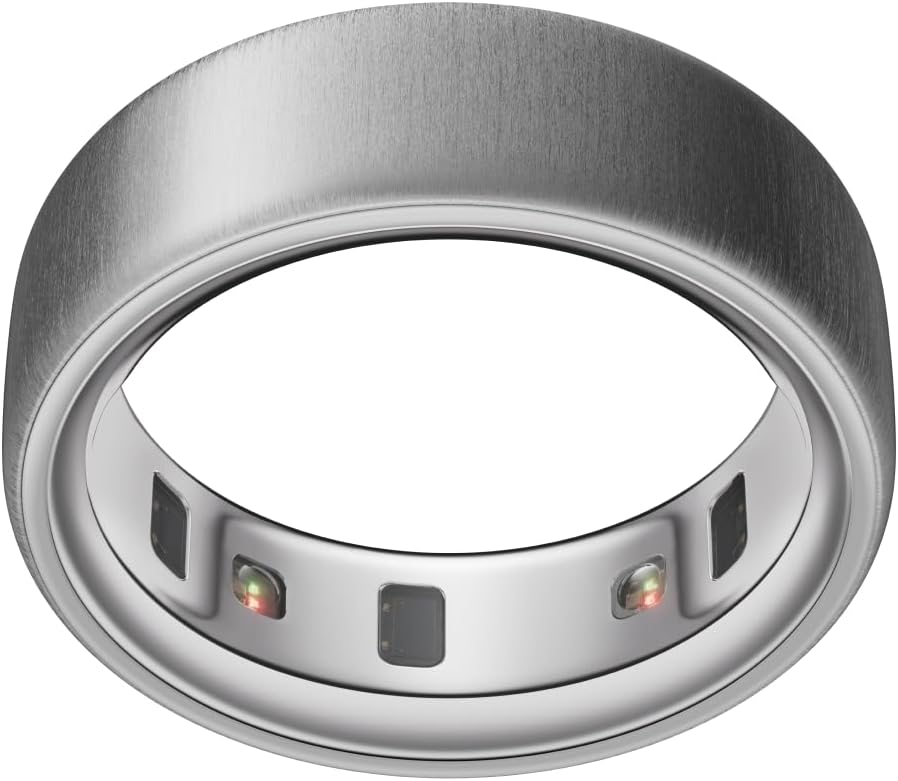
The Oura Ring 4 in brushed silver offers a stylish and discreet option for individuals looking to monitor their health continuously. Its lightweight titanium design is complemented by advanced sensors that track key health metrics, all while maintaining comfort for all-day wear.
Design and build quality
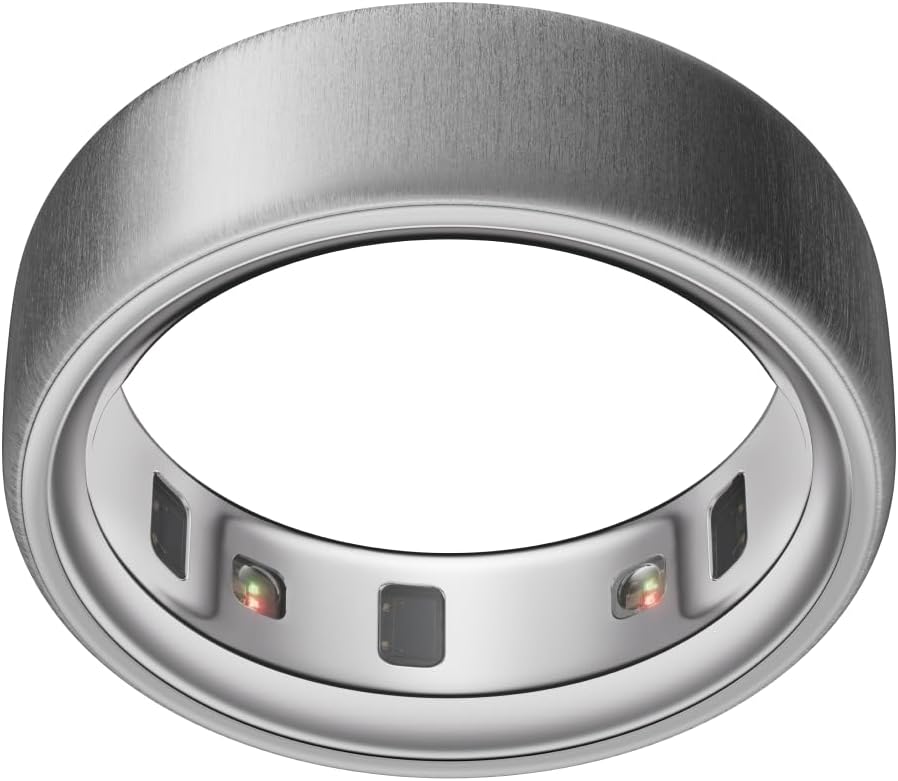
The exterior is milled from titanium with a brushed silver finish and a low-profile, rounded silhouette designed for all-day wear. The metal shell keeps the ring light yet durable, and the smooth inner curve helps minimize irritation during sleep or exercise. The compact footprint is intentionally unobtrusive on the finger so it doesn’t catch on clothing or feel bulky under gloves.
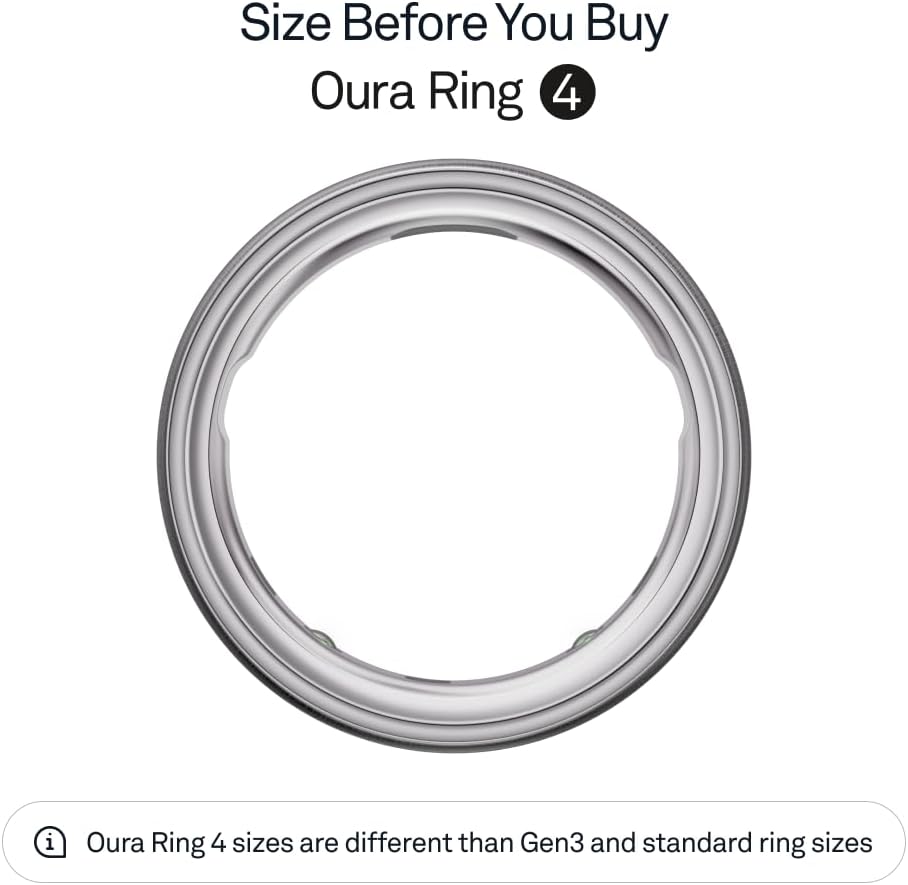
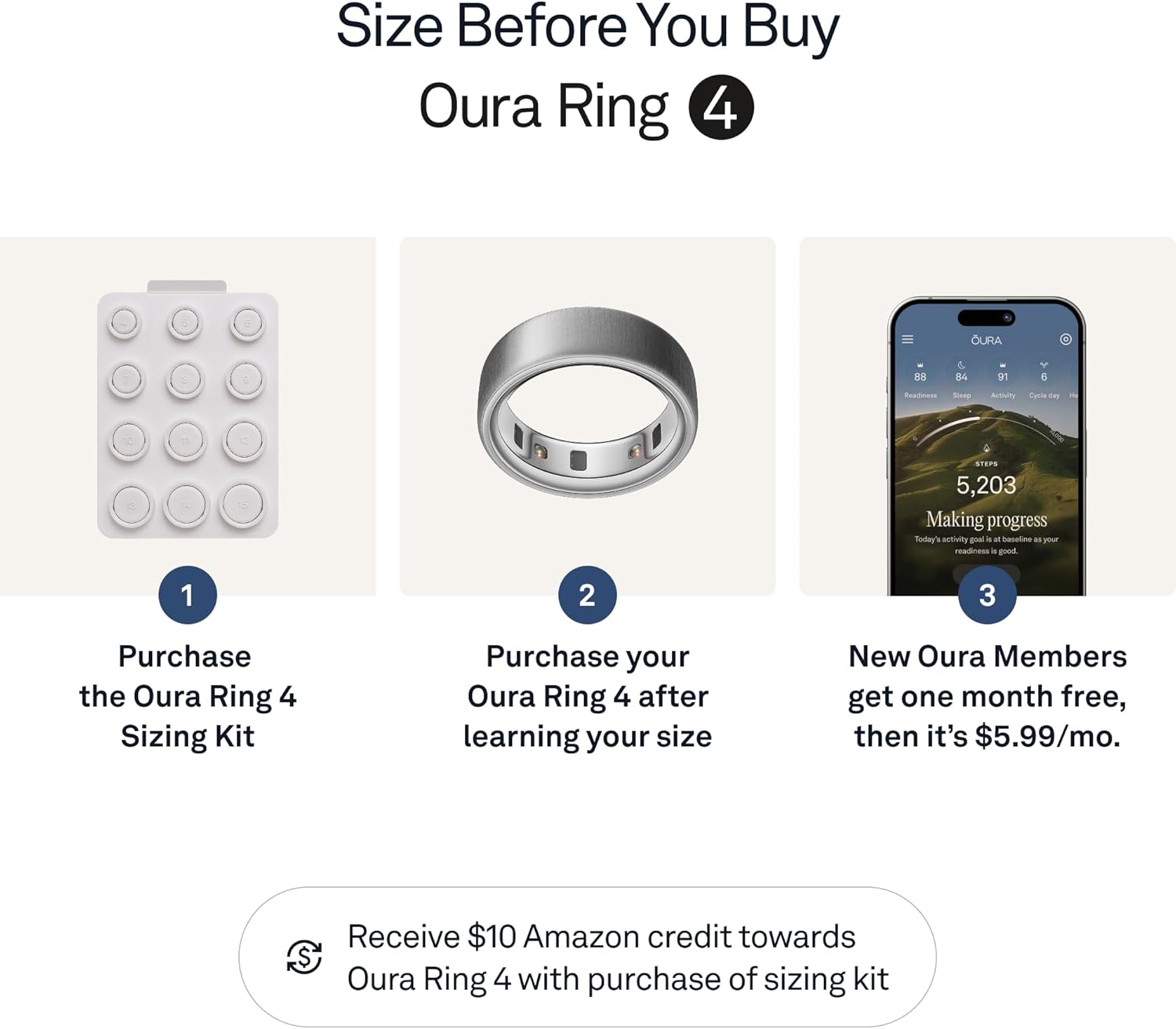
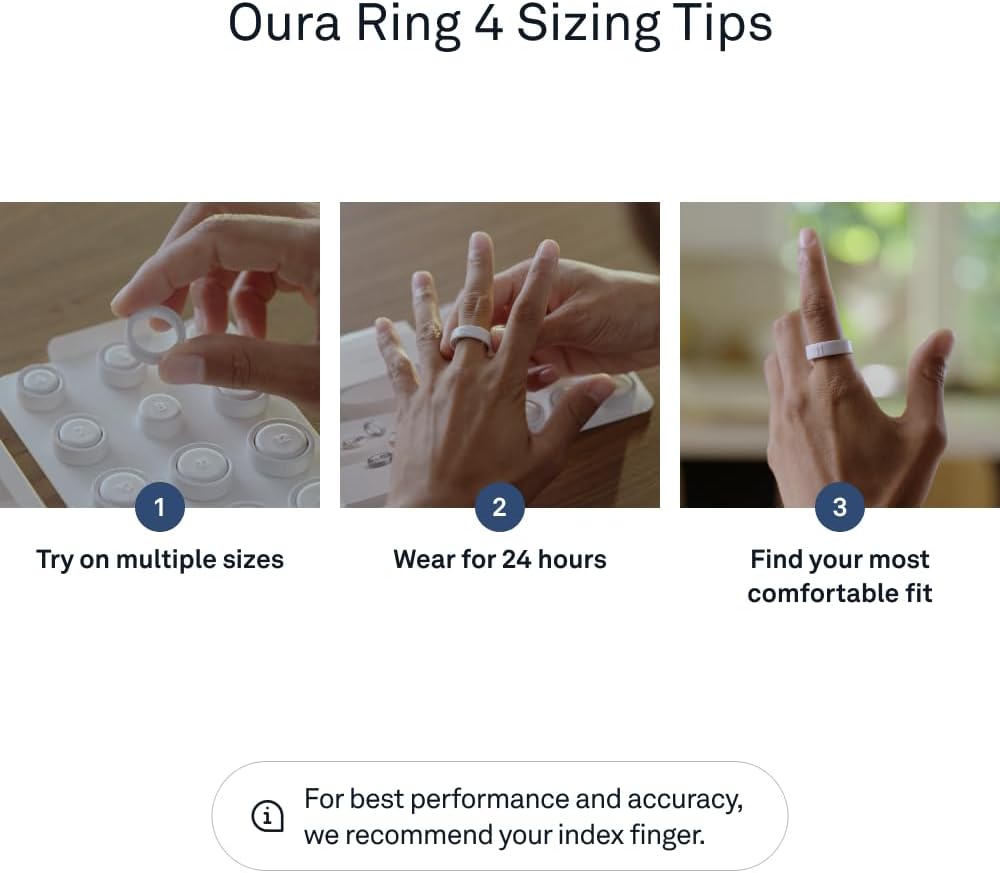
Sensors and contacts sit flush with the inner surface to maintain consistent skin contact, which is crucial for reliable biometric readings. Because fit directly affects sensor performance, sizing is especially important: the ring uses the manufacturer’s own sizing standard rather than typical US jewelry sizes. Most buyers find the separate sizing kit helpful — it’s strongly recommended before purchase to ensure comfort and stable sensor contact.
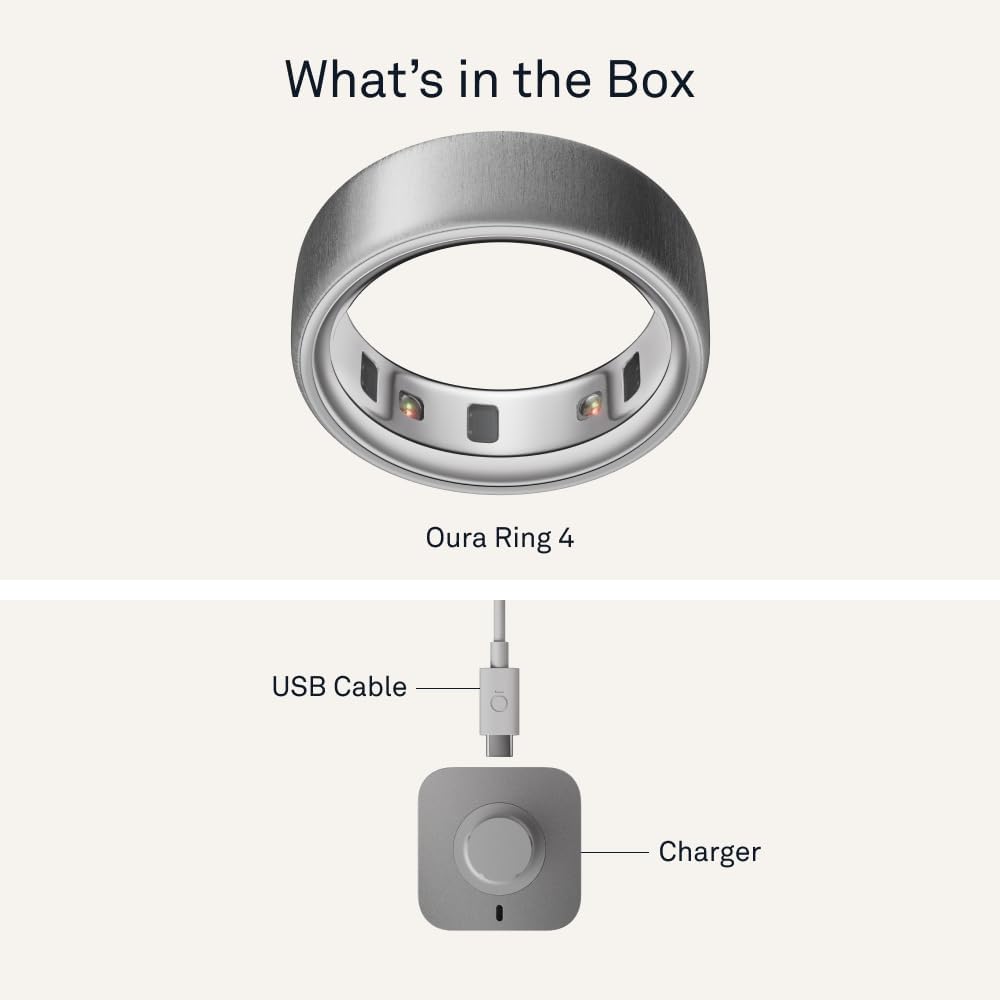
Typical packaging includes the ring, a proprietary charger and USB cable, plus quick-start guides. The charger docks the ring to align the charging pins; the included cable connects the charger to a power source. The company has also highlighted refinements in edge profile and internal fit aimed at improving comfort compared with prior iterations.
The design is intended for everyday use — sleep, workouts, and showering — with water resistance suitable for those activities. The titanium construction and brushed finish show normal wear modestly and are chosen to balance longevity with a lightweight feel for continuous wear.
Key features and functionality
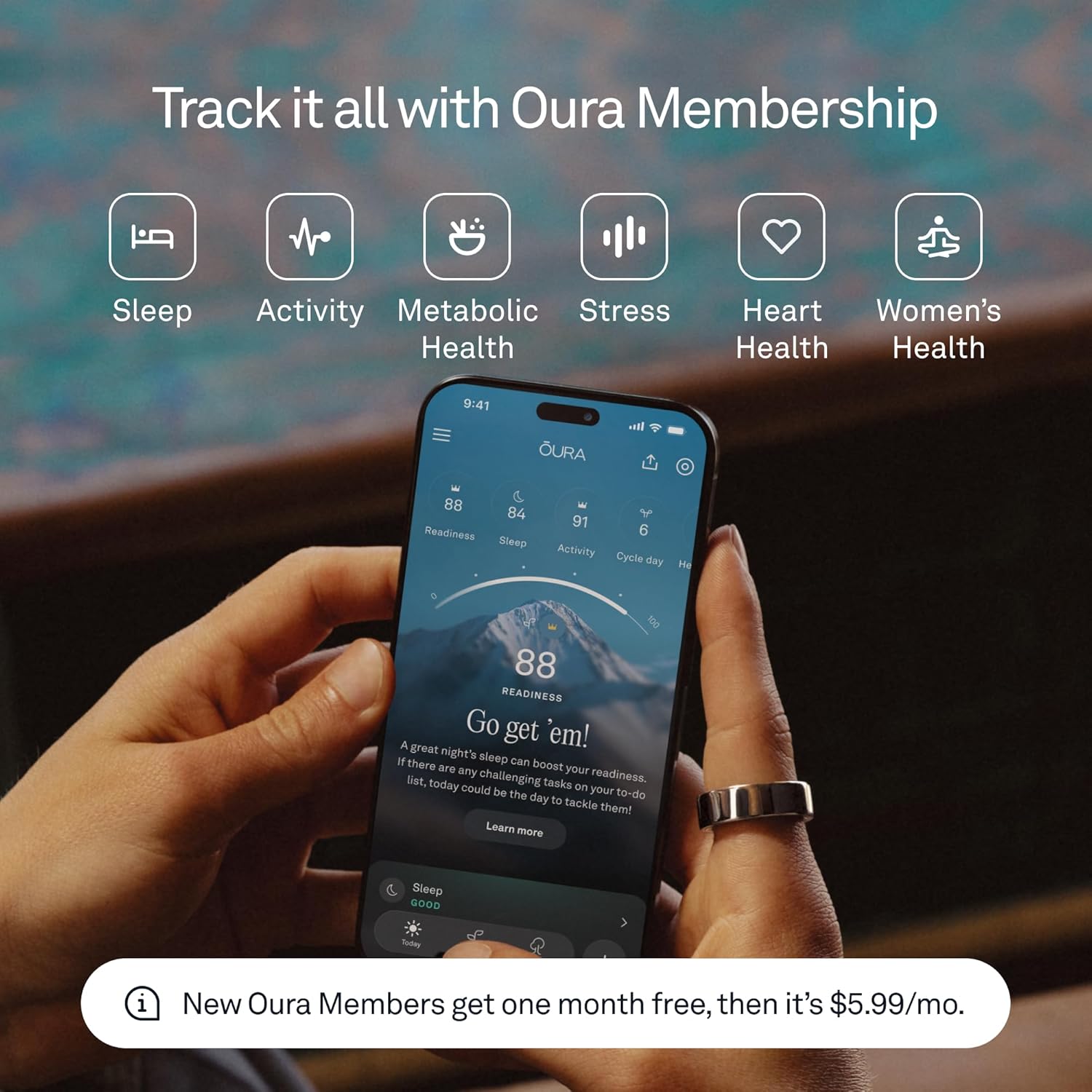
At the core is a Smart Sensing platform that passively collects continuous data across a broad set of health signals — covering sleep staging, night and daytime heart rate trends, readiness indicators, metabolic signs, stress markers, and features tailored for menstrual and reproductive health. Detailed trend charts and actionable summaries are produced in the app rather than on the device itself, so the companion smartphone app is the primary interface for insights and notifications.
Connectivity is handled over Bluetooth, and the ecosystem supports syncing with common health platforms and third-party services so you can share metrics where you already track activity. The app lets you manage multiple rings on one account, preserving historical continuity when you switch rings or sizes so your long-term trends remain intact.
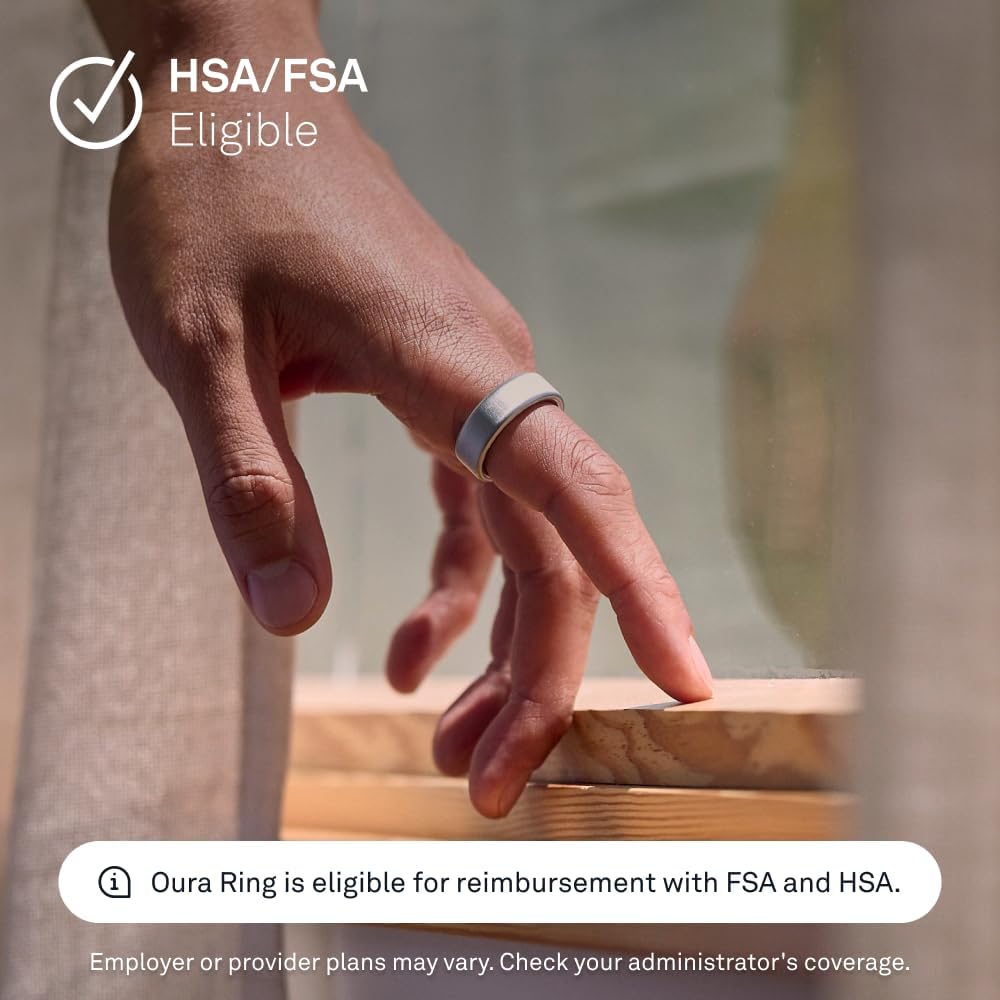
Eligible purchases of the device and some accessories may qualify for FSA or HSA reimbursement in many regions. The overall experience is focused on continuous, low-friction monitoring rather than momentary readouts, making it suited for people who want automated, long-term lifestyle and recovery guidance delivered to their phone.
Real world performance
Wearing it feels like a piece of jewelry rather than a gadget: low-profile, lightweight, and intended for continuous wear so tracking happens automatically through the day and night. There’s no display to glance at, and on-device feedback is minimal, so most interaction happens inside the companion app where nightly summaries and trends live.
The device uses passive sensors to track sleep architecture, resting heart rate and heart rate variability, plus background activity sensing for overall movement and steps. Those measurements are presented as consolidated sleep and readiness scores in the app, with historical graphs to help you spot trends and recovery patterns rather than single-point performance metrics.
Outdoor routes and mapped workouts are handled through a paired smartphone—there’s no native GPS in the ring—so it’s best for people who want recovery and sleep insight rather than live running pace or turn-by-turn maps on the device. Because all feedback is delivered after the fact, expect an initial learning curve to interpret what readiness and sleep scores mean for your training and daily plans.
Battery life is multi-day so charging is periodic rather than daily; you’ll want to build a short charging session into your weekly routine. In practice this form factor is excellent for long-term trend monitoring and recovery-focused users, but less suitable if you need immediate, glanceable workout metrics or on-device navigation.
Charging battery and power
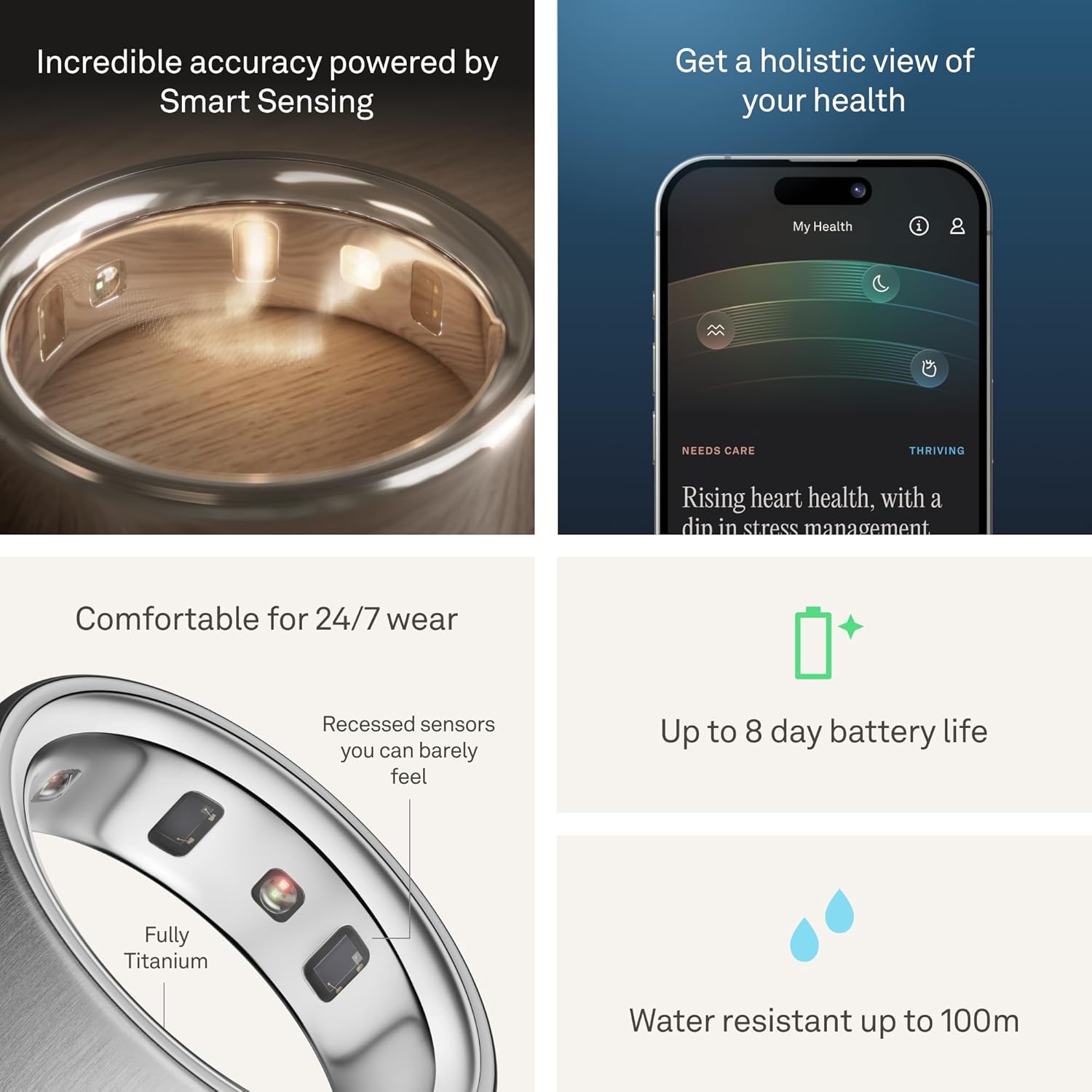
Battery life typically spans several days on a single charge; many users report roughly five to eight days depending on how often high-frequency sensors and continuous monitoring features are used. The device uses an internal lithium‑polymer battery, so keeping the included charger handy for routine top-ups is important.
The package contains a proprietary magnetic charging puck and a USB cable, rather than a standard USB‑C or Lightning port on the ring itself. Fast-charge specifications are not prominently documented, so it’s best to plan for short, regular charges instead of expecting rapid replenishes during a short break.
The companion app shows battery percentage and an estimated remaining duration, which makes it easy to schedule charging around sleep or workouts. Many users find they charge the ring one to three times per week; buying a second charger for travel or work is a practical option. In some cases accessories like chargers may be eligible for FSA or HSA reimbursement—check your plan for details.
Ease of setup and use
Setup is handled almost entirely through the companion smartphone app and works with both iOS and Android devices using Bluetooth pairing. The app walks you through account creation, linking the ring, and any initial firmware updates; once paired, most day-to-day control, settings, and history are managed from the phone rather than the ring itself.
The company strongly recommends using a sizing kit before placing a final order because ring sizing follows its own standard. Getting an accurate fit is important not only for comfort but also for ensuring consistent contact and reliable sensor readings, so take the sizing step seriously before committing to a size.
After pairing, the app becomes the hub for everything: enrollment in the membership/trial, viewing daily metrics and long‑term trends, adjusting notification preferences, and switching which ring is active if you own multiple finishes. The in‑app interface organizes sleep, recovery, and activity insights so most interactions happen on your phone.
Physical interaction with the ring is intentionally minimal — there’s no screen, and you mainly put it on, take it off, and charge it when needed. New users receive a trial period to evaluate membership features; continued access to the full suite of insights typically requires purchasing a subscription once that trial ends.
Pros cons and trade offs
The ring’s biggest strengths are its discreet, durable titanium construction and a sensor suite designed for continuous wear. It tracks core biometrics such as heart rate, heart-rate variability, body temperature and sleep and activity metrics without blocking daily routines, making it a solid option for 24/7 monitoring and sleep-first users.
Battery life typically stretches across multiple days between charges (actual runtime varies with use and settings), and the device connects with major health platforms for data sharing. A trial membership is included so new owners can evaluate the subscription features before committing, and some accessories and purchases may be eligible for HSA/FSA reimbursement depending on your region and plan.
Expect trade-offs compared with a smartwatch: there’s no built-in display for live readouts, and tactile feedback is limited compared with devices that provide haptics or on-wrist prompts. The ring also depends on a paired smartphone for GPS and certain contextual data, so it’s less standalone for mapping runs or bike routes.
Finally, the subscription model is required for the full set of insights and introduces ongoing cost after the trial ends. Fit and sizing matter for both comfort and sensor accuracy, so measure carefully before buying and use the provided sizing tools to avoid returns.
Who this product suits
This ring is a good fit for people who want discreet, continuous health monitoring in a jewelry-like form rather than a wrist device with a screen. It’s geared toward users who prioritize sleep quality, recovery tracking, long-term trends, and personalized insights delivered through a comprehensive mobile app instead of instant, on-device readouts.
It suits those comfortable with an app-first experience and with using a subscription service after an initial trial period to unlock the full set of guided insights and historical analysis. The device emphasizes aggregated trends and recommendation-style feedback rather than live coaching or glanceable statistics on the wearable itself.
It’s less appropriate for anyone who needs on-device notifications, a visible display, or a standalone GPS tracker for outdoor workouts. Also consider the sizing process—this product requires using a sizing kit or otherwise ensuring an accurate ring size before purchase, so buyers unwilling to go through that step should look elsewhere.
If you want a minimal, stylish monitor for sleep and recovery with deep app-based reporting, this is a solid choice. If you need real-time metrics, frequent in-activity feedback, or standalone mapping, consider other classes of wearables built for those use cases.
As an Amazon Associate, I earn commission on qualified purchases.